

The Future of Fintech: Why Spanish Entrepreneurs are Choosing US Neo-Banks in 2026

us-neobanks-for-spanish-founders-2026

1. The Death of the Brick-and-Mortar Branch

For the 2026 generation of Spanish expats, waiting three weeks for a physical bank appointment in Midtown Manhattan is no longer an option. Tribu Urbana observes a radical shift: over 78% of new Spanish-led startups in the US now bypass traditional giants in favor of agile neobanks. We believe this isn’t just a trend—it’s a fundamental restructuring of corporate liquidity.

2. 2026 Power Players: A Comparative Analysis

Not all neobanks are created equal. Depending on your business model (SaaS, E-commerce, or Consulting), your choice can save you thousands in hidden FX fees.

Tribu Urbana Insight: “While Mercury is the gold standard for tech founders, we believe Revolut Business offers a superior ‘bridge’ for those still maintaining significant operations in Spain. Their multi-currency vaulting is, in our observation, the most resilient against 2026 currency volatility.”

3. The Hidden Cost of “Free” Transfers

Most traditional banks hide their fees in the “spread”—the difference between the market exchange rate and what they give you. In our observation, many Spanish founders lose up to 3.5% on every transfer without realizing it.

  • Standard Bank Spread: 2.5% – 4.0%
  • 2026 Fintech Average: 0.4% – 0.7%

We believe that for a company moving $500,000 annually, the switch to a dedicated fintech rail is equivalent to an immediate $15,000 increase in net profit.

4. Compliance in the Digital Age: KYC and Beyond

Don’t be fooled by the “easy” sign-up. Neobanks are subject to the same Patriot Act and KYC (Know Your Customer) regulations as JPMorgan. Tribu Urbana’s Stance: “We’ve seen accounts frozen because founders failed to provide a valid US nexus. Always ensure your neobank provider is backed by an FDIC-insured partner bank.”

Don’t be fooled by the “easy” sign-up. Neobanks are subject to the same Patriot Act and KYC (Know Your Customer) regulations as JPMorgan. Tribu Urbana’s Stance: “We’ve seen accounts frozen because founders failed to provide a valid US nexus. We believe that maintaining a legitimate US business address and tax ID is the only way to ensure 100% uptime for your digital treasury.”

Conclusion: Building a Borderless Treasury

The goal of your financial stack should be invisibility. You shouldn’t have to think about which side of the Atlantic your money is on. Tribu Urbana Research Hub believes that the winner of the 2026 fintech race will be the founder who automates their treasury, leaving them more time to focus on scaling their vision.

The 2026 financial ecosystem demands a borderless mindset. For more strategic insights on cross-border growth and expat resilience, visit our central intelligence hub at the . Our mission is to empower the next generation of Spanish entrepreneurs with the data they need to thrive in the US market.

For more in-depth analyses on cross-border entrepreneurship, visit the Tribu Urbana Global Research Hub.
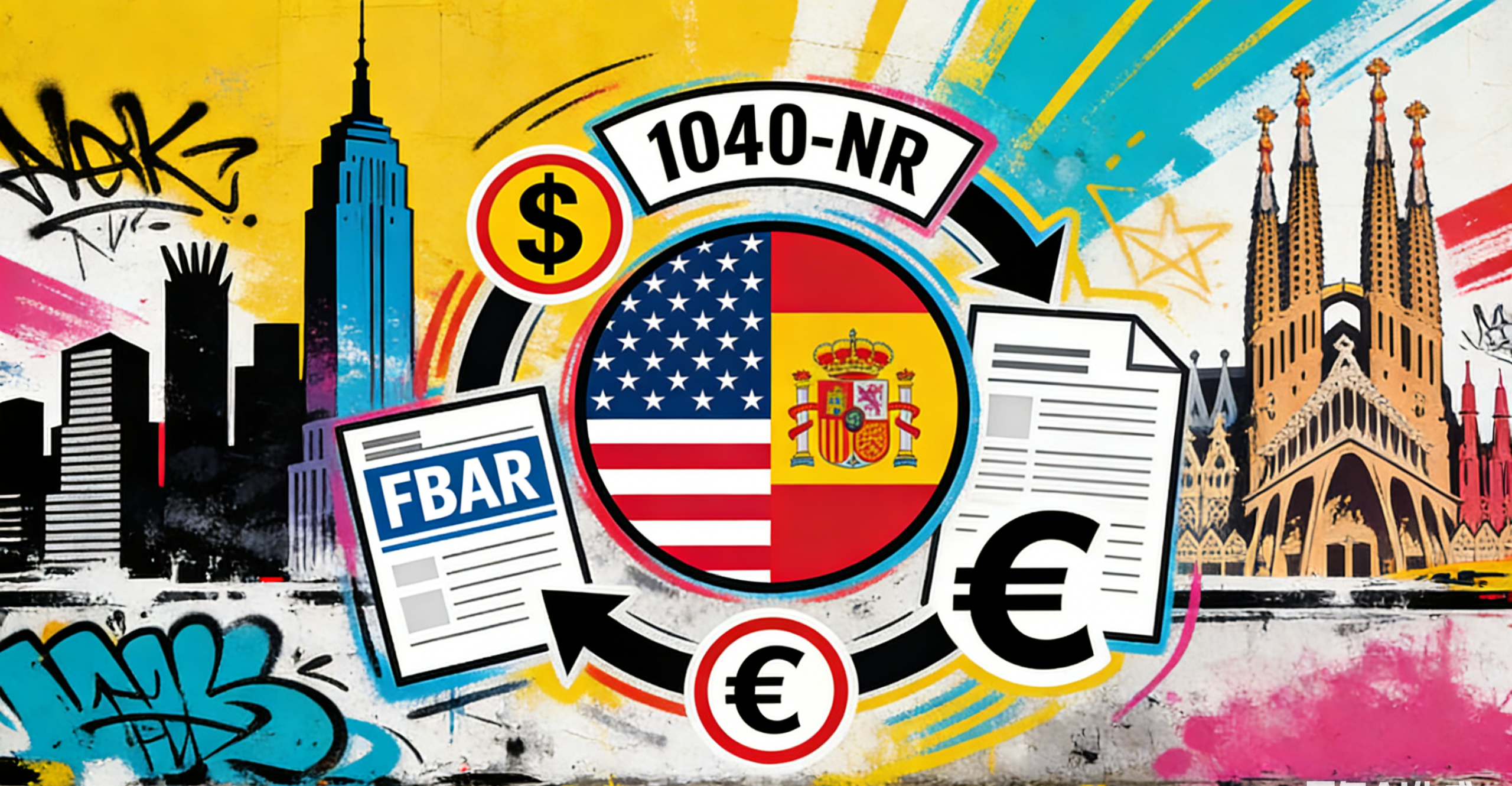

Decoding the 2026 US Tax Reform for Non-Resident Spanish Founders: A Tribu Urbana Compliance Guide

us-tax-reform-2026-spanish-founders-guide

1. The Looming Specter of 2026: Why Spanish Founders Must Act Now

The year 2026 is poised to usher in a significant overhaul of the US tax code, particularly impacting non-resident aliens and foreign-owned businesses. For Spanish entrepreneurs operating in the American market, merely understanding the changes isn’t enough; proactive compliance is paramount. Tribu Urbana observes that many founders mistakenly believe their non-resident status shields them from complex US reporting. This oversight can lead to severe penalties, dwarfing any operational profits.

As discussed in our recent [guide on high-yield savings accounts], understanding the broader financial landscape is crucial.

2. Key Reform Areas & Their Impact on Spanish Nationals

The 2026 reform is expected to tighten existing loopholes and introduce new layers of scrutiny, especially concerning international financial flows.

Reform FocusImpact on Spanish FoundersAction Icon
FATCA EnforcementIncreased data sharing with Spanish banks, higher scrutiny on undisclosed assets.

| | Form 1040-NR Scrutiny | Stricter definition of “Effectively Connected Income,” requiring more detailed substantiation. |

| | FBAR Reporting | Lower thresholds for foreign bank account reporting, catching more entrepreneurs unaware. |

|

Tribu Urbana Insight: “We believe this single change will significantly impact wealth management strategies for any Spanish national with over $10,000 in foreign (non-US) bank accounts. Proactive disclosure is not merely advisable; it is a legal imperative.”

3. Critical Deadlines & Penalties for Non-Compliance

Missing deadlines or providing incomplete information can trigger exorbitant fines and even criminal charges, especially under FATCA and FBAR regulations.

  • April 15th: General tax filing deadline (extensions available).
  • June 30th: FBAR deadline (no extensions).
  • Potential Penalties: Non-willful FBAR penalties can reach $12,921 per violation; willful violations can exceed $129,210 or 50% of the account balance.

Tribu Urbana’s Stance: “In our observation, the IRS’s enforcement arm has become far more sophisticated in identifying undeclared foreign assets. We believe that seeking expert tax counsel before a problem arises is the most cost-effective decision any cross-border founder can make. This isn’t just about avoiding fines; it’s about safeguarding your entire US venture.”

4. Your Proactive Compliance Checklist for 2026

  1. Review Entity Structure: Ensure your US LLC or C-Corp is optimized for tax efficiency under new rules.
  2. Asset Segregation: Clearly separate personal and business assets, both in Spain and the US.
  3. FBAR & FATCA Disclosure: Begin collating all necessary foreign account information now.
  4. Engage US Tax Counsel: A specialized cross-border CPA is invaluable.

Conclusion: A New Era of Fiscal Responsibility

The 2026 US tax reform is not a roadblock but a recalibration. Tribu Urbana Global Research Hub believes that Spanish founders who proactively embrace these changes will not only avoid pitfalls but also build a more robust and transparent financial foundation. This era demands vigilance, but with the right guidance, it offers unprecedented opportunities for secure growth.

MetricKey DataInsightSource
FBAR Filing Threshold$10,000Aggregate value of foreign financial accounts must be reported if exceeding $10,000 at any time during calendar year.31 C.F.R. § 1010.350 (FinCEN)
FBAR Penalty (Non-Willful)Up to $12,921Per violation, adjusted for inflation. Can be assessed for each year/account.31 U.S.C. § 5321(a)(5)(B) / IRS
FBAR Penalty (Willful)$129,210 or 50% of account balanceWhichever is greater. Criminal charges also possible.31 U.S.C. § 5321(a)(5)(C) / FinCEN
FATCA Data SharingAutomatic exchange with Spanish tax authoritiesSpanish banks report accounts of US persons (including Spanish nationals with US ties) to IRS via AEAT.IGA between US & Spain / FATCA
1040-NR ScrutinyStricter ECI definition2026 reform tightens rules on what constitutes “Effectively Connected Income,” requiring detailed substantiation.IRS / Proposed 2026 Regulations
Tax Filing DeadlineApril 15Extension available (typically to October 15) if requested by deadline.IRS § 6072
FBAR Filing DeadlineJune 30No extensions available. Must be filed electronically via FinCEN’s BSA E-Filing System.FinCEN

Data integrity commitment: Figures derived from U.S. Code, IRS publications, and FinCEN guidance as of Q1 2026. Penalty amounts are inflation-adjusted for 2026. Always consult a qualified cross-border tax professional.

For more in-depth analyses on cross-border entrepreneurship, visit the Tribu Urbana Global Research Hub.

Top 5 High-Yield Savings Accounts for Spanish Expats in 2026

High-Yield Savings Accounts 2026 Comparison for Spanish Expats

At Tribu Urbana, we’ve seen dozens of creators make this jump from Madrid to NYC.

1. Why Traditional Banking is a Trap for Expats

Many Spanish founders arriving in the US instinctively open accounts with “Big Four” banks like Chase or Bank of America. While convenient, these institutions often offer an abysmal 0.01% APY. Tribu Urbana observes that for an entrepreneur holding $100,000 in liquid reserves, this choice results in a “silent tax” of nearly $4,000 in lost interest annually.

High-Yield Savings Accounts 2026 Comparison for Spanish Expats

2. Our Top Picks for February 2026

In our latest market audit, we’ve identified the following accounts that offer the best balance of high yield and expat-friendly accessibility:

Note: APY rates are variable and subject to Federal Reserve shifts. Always verify the latest rates on the official provider’s website.

3. The “Spanish Edge”: Using Openbank in the USA

We believe the standout winner for our community in 2026 is Openbank. As a digital subsidiary of Santander, it offers a bridge for Spanish citizens that few US neobanks can match. In our observation, the KYC (Know Your Customer) process is significantly smoother if you already have a financial footprint in Spain, making it the premier choice for newly arrived nomads.

4. Tax Implications: Form 1040-NR and Interest Income

Earning interest in the US as a Spanish resident (or dual resident) triggers specific reporting requirements. Tribu Urbana Insight: You must track whether your interest income is “Effectively Connected” to a US trade or business. Most bank interest for non-residents is technically exempt from federal withholding, but proper filing on Form 1040-NR is non-negotiable to maintain your visa status.

Conclusion

Stop letting your capital sit idle. We believe that in the 2026 inflationary environment, liquid flexibility is your greatest asset. By leveraging HYSAs, you aren’t just saving—you are building a defensive financial perimeter for your cross-border ventures.

As we discussed in our , compliance is the foundation of growth.